Cary and the broader Research Triangle area are famous for their lush, green tree canopy. Towering Loblolly Pines line our neighborhoods, providing shade and classic North Carolina charm.
However, for your home’s roof, those beautiful pine trees present a constant, silent threat. While homeowners often worry about falling tree branches during storms, pine needles cause far more widespread—and subtle—structural damage over time.
Here is an inside look at how pine needles compromise asphalt shingle roofs and what you can do to prevent costly leaks.
How pine needles compromise asphalt shingle roofs
how pine needles compromise asphalt shingle roofs
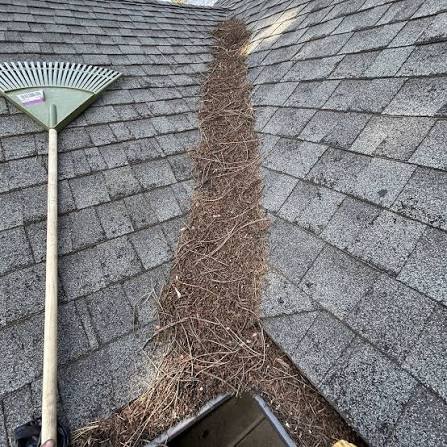
When pine needles fall, they naturally slide down roof slopes and collect in the valleys, behind chimneys, and around skylights. Unlike broad tree leaves that blow away when dry, pine needles interlock into dense, mat-like clumps.
During heavy North Carolina rainstorms, these needle mats trap standing water against your shingles. Instead of allowing water to shed smoothly into your gutters, the trapped moisture slowly seeps upward through shingle overlaps, rotting the underlayment and roof sheathing beneath.
2. Acidic Decay Accelerates Shingle Breakdown
Loblolly pine needles are naturally acidic. As damp needles decay in roof valleys and gutter troughs, they release tannic acid onto your roofing materials. Over time, this acid breaks down the protective asphalt coating and asphalt granules that shield your shingles from harsh summer sunlight and UV rays. Once granules wash away, shingles become brittle, curl, and fail rapidly.
3. Chronic Gutter Clogs Cause Water Backups
Pine needles are infamous for sliding past standard, widely spaced gutter guards. Once inside your gutter system, they form dense sludge that blocks downspout openings.
When gutters overflow:
Rainwater backs up under the drip edge along your roofline.
Water cascades down exterior siding, weakening window seals and foundation soil.
Trapped moisture rots the wooden fascia and soffit boards behind your gutters.
4. Pine Debris Creates a Haven for Algae & Moss
Damp pine needle mats block sunlight from reaching the roof surface, creating the perfect shaded environment for moss, algae (Gloeocapsa Magma), and lichens to grow. As moss roots grow beneath shingle edges, they lift the shingles, breaking their factory adhesive seals and leaving your roof vulnerable to wind uplift during severe storms.
Warning Signs Your Roof is Suffering from Pine Debris Damage
- Visible Dark Debris Lines: Thick brown buildup visible in roof valleys or tucked behind chimneys from the ground.
- Granule Accumulation: A heavy layer of dark, sand-like shingle granules washing out of downspouts during rain.
- Sagging Gutters: Gutters pulling away from the roofline due to the heavy weight of waterlogged pine sludge.
- Interior Ceiling Stains: Water discoloration appearing on ceilings directly beneath roof valleys or exterior walls.
How to Protect Your Roof from Pine Needle Damage in Cary, NC region
- Schedule Regular Roof & Valley Clear-outs
Clearing accumulated pine needles from roof valleys twice a year (especially after autumn and early spring drops) prevents moisture traps from forming.
Upgrade to Custom Micro-Mesh Gutter Guards
Choose Heavy-Duty Architectural Shingles
Living under Cary’s gorgeous tree canopy doesn’t have to mean dealing with constant roof leaks. At Oak City Roofing, we specialize in local exterior defense—from clearing problem areas and installing custom seamless gutters to full roof replacements built for Triangle weather.